
Radon is an invisible a naturally occurring radioactive gas that affects thousands of UK homes every year it seeps into homes from the ground and can build up inside buildings. Long-term exposure to high levels of radon significantly increases the risk of lung cancer. Taking steps to reduce radon levels in your housing stock is essential for protecting residents, safeguarding properties, and improving indoor air quality.
What Is Radon and Why Is It Dangerous?
Radon is a colourless, odourless, and tasteless gas that forms naturally as uranium in rocks and soil breaks down. It can seep into properties through small gaps in floors, walls, pipe openings, or foundations. Once inside and inhaled, radon decay particles can damage lung tissue, gradually increasing the risk of lung cancer. In fact, radon exposure is the second leading cause of lung cancer after smoking.
How to test your home
Regular monitoring is essential to ensure your household remains safe. Certain areas of the UK, such as Scotland, Wales, the Southwest of England, and the Cotswolds, have higher radon levels due to local geology. You can check your residents’ risk level by viewing the UK Radon Map below:
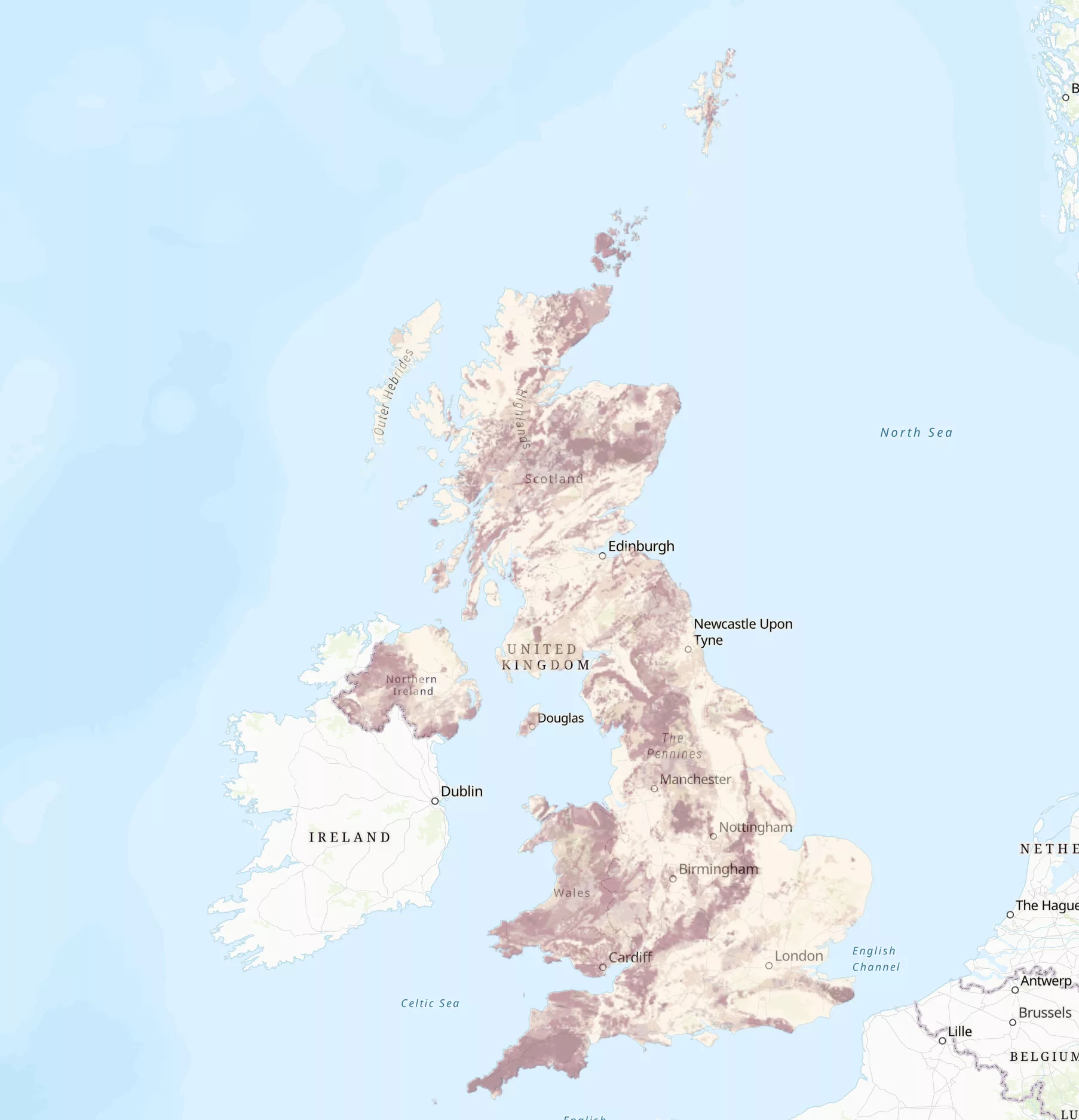
Even if your area’s risk is considered low, it’s still important to test, as the map reflects likelihood rather than certainty. Households with children, older adults, or individuals with respiratory conditions should be especially proactive about testing and monitoring indoor air quality. At Mouldex, we offer professional radon surveys, providing accurate readings and personalised advice.
Interested in how we test for radon?
Check out the video below.
Reducing Radon in Your Home
The best way to lower radon levels is to improve ventilation. We recommend using a radon sump, which is a method supported by the UK government. A radon sump is a plastic container with a pipe that is placed under the house. It collects the radon gas before it gets inside and safely vents it outside, so it doesn’t build up indoors.
The system works by pulling radon gas from under the floor into the sump. Then, the gas is pushed outside through a pipe, either with the help of a fan (active system) or just by natural air movement (passive system).
Final Thoughts: Protect Your Home from Radon
Don’t leave radon to chance. Whether you’re a homeowner or managing social housing, understanding your property’s radon risk is the first step toward protecting your household. Radon is a serious but manageable issue. With the right knowledge and support, you can make informed decisions and safeguard your indoor environment for years to come.
For further support or to arrange a professional survey assessing condensation and mould risks, contact us on 01278 428347, email info@mouldexltd.com or fill out our contact form.